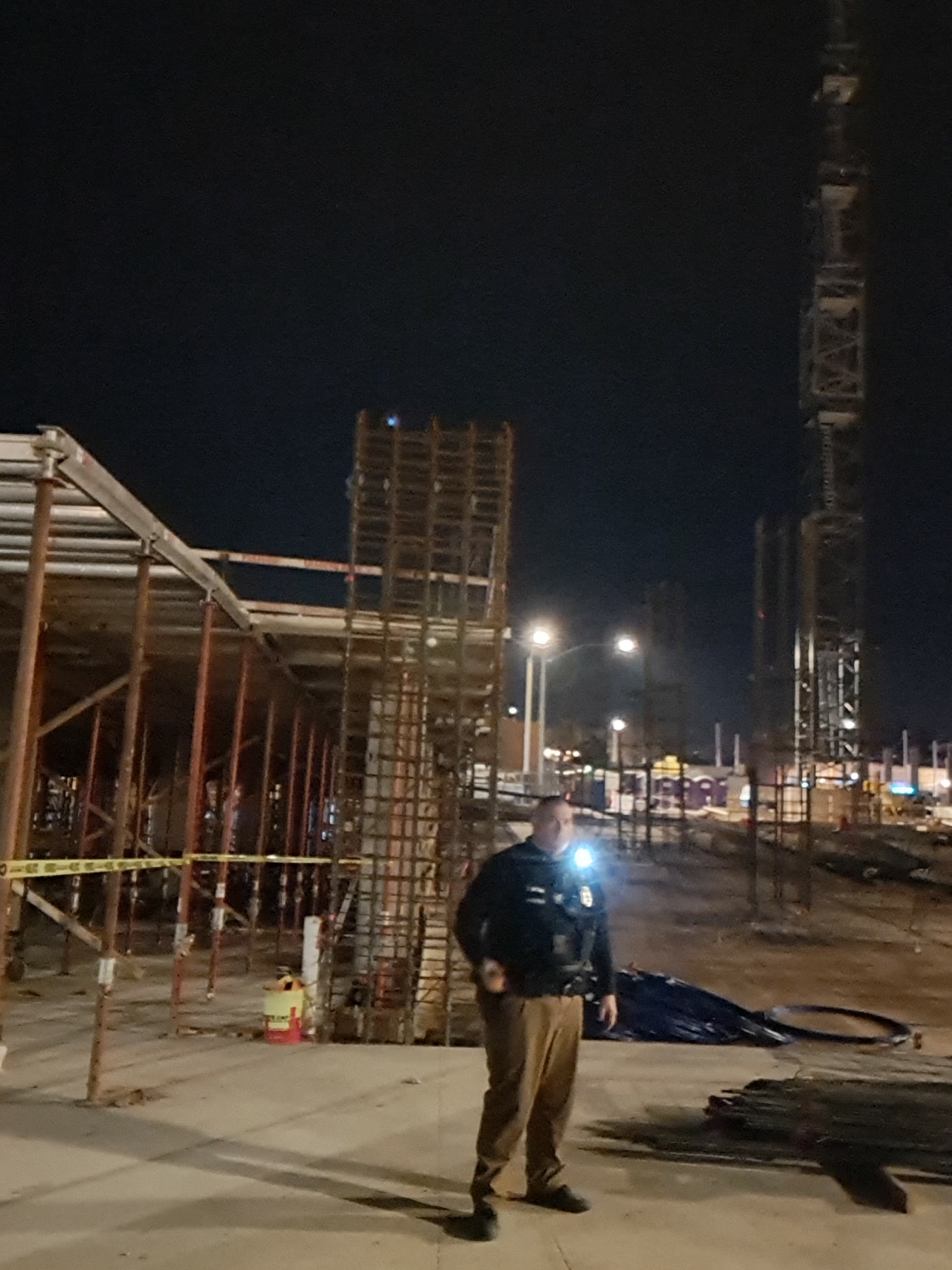
TUCSON, Arizona — Privateer Security Forces completed its construction-security assignment for Opus Design Build, L.L.C. at Ari on Fourth without a major theft, security-related injury, or major security incident delaying the project.
The assignment placed Privateer on a dense urban construction site at 211 North Fourth Avenue, next to a bar and inside one of Tucson’s most active nighttime entertainment districts. Company records describe near-daily attempts by trespassers to climb or jump the construction fence. The project nevertheless reached its critical opening date before the fall 2024 university semester.
Privateer’s final security record documented two minor thefts during the construction period. Internal reviews associated both incidents with people who already had authorized access to the site rather than outside trespassers breaching the perimeter. Neither incident became a major loss or delayed construction.
High exposure. No major security loss.
The outcome was achieved through trained on-site officers, technology-assisted observation, documented patrols, and consistent intervention at a perimeter tested by the surrounding nightlife almost every night.
A 13-story gateway between downtown and the university
The Opus Group describes Ari on Fourth as a 323-unit multifamily development with 4,971 square feet of street-level retail. The building sits beside the Fourth Avenue and Ninth Street Sun Link stop and serves as a gateway between downtown Tucson and the University of Arizona.
An American Concrete Institute project case study identifies Opus Design Build as the prime contractor and notes that the opening date was tied to the approaching school semester. The report says the critical schedule was achieved and the building opened in August 2024 before the semester began.
BizTucson reported that the $130 million development formally opened in August 2024. At the ribbon cutting, a Bridge Investment Group executive described Ari as the only one among 20 to 30 projects launched at roughly the same time that came in on schedule. City permit records also document an August 16 move-in date.
A construction fence inside a nightlife district
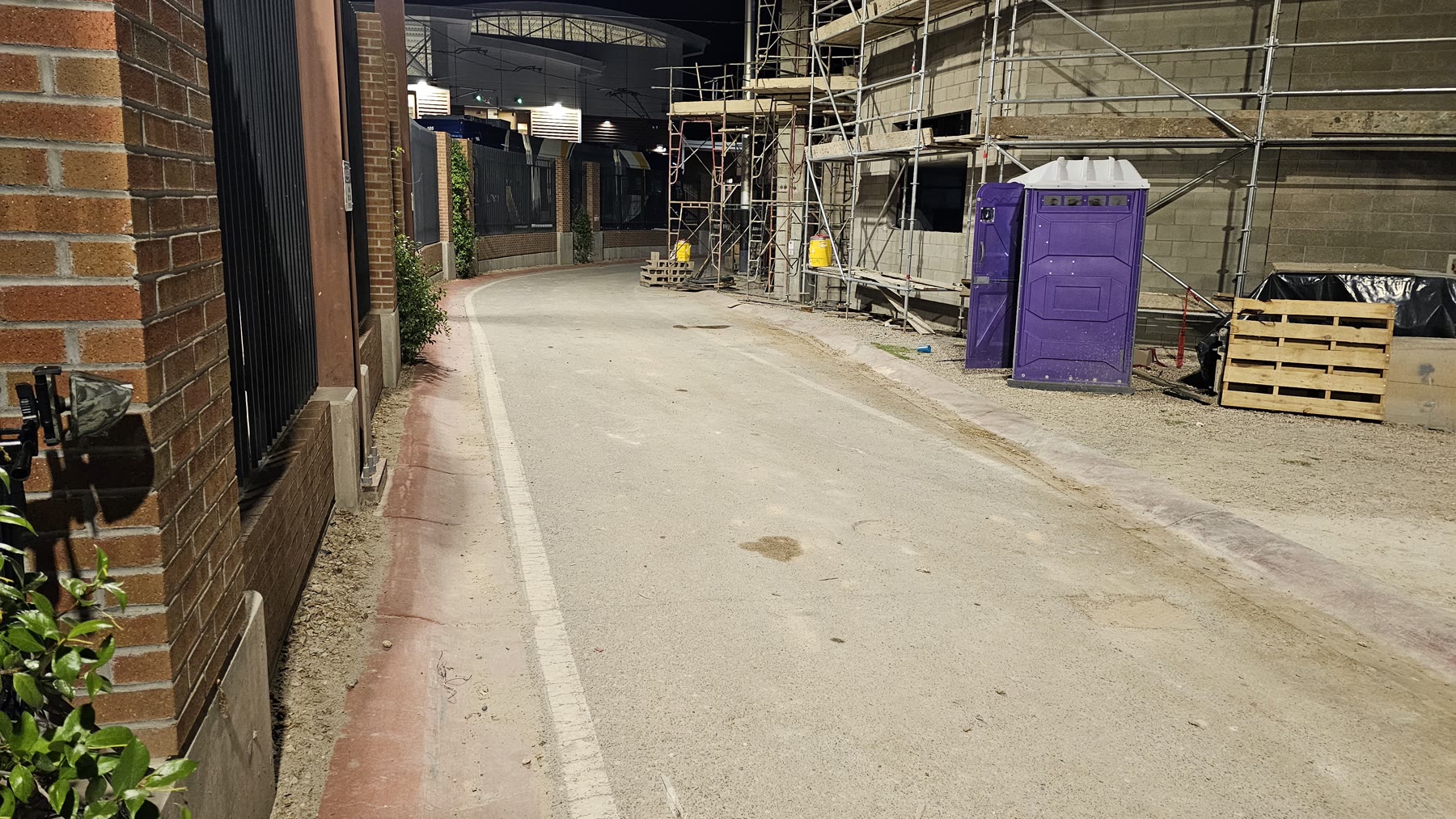
Ari on Fourth was not isolated behind a wide setback. Local reporting places the development next to O’Malley’s Bar & Grill, with the streetcar stop outside its entrance. The site’s rear and side approaches bordered the constant movement of an entertainment district linking downtown with the University of Arizona.
Visit Tucson describes Fourth Avenue as a bar-dense district that remains active nearly every night, with college bars, dancing, restaurants, and late-night crowds. For a construction-security operation, that activity meant a steady flow of pedestrians and frequent alcohol-related disorder immediately outside a changing worksite perimeter.
Privateer’s officers encountered attempted fence jumping or unauthorized entry on a near-daily basis. Not every person crossing a boundary posed the same level of threat, but every entry required attention: construction sites contain unfinished drops, exposed materials, heavy equipment, temporary power, and other hazards capable of turning a trespass into an injury or project interruption.
Technology detected activity; trained officers decided the response
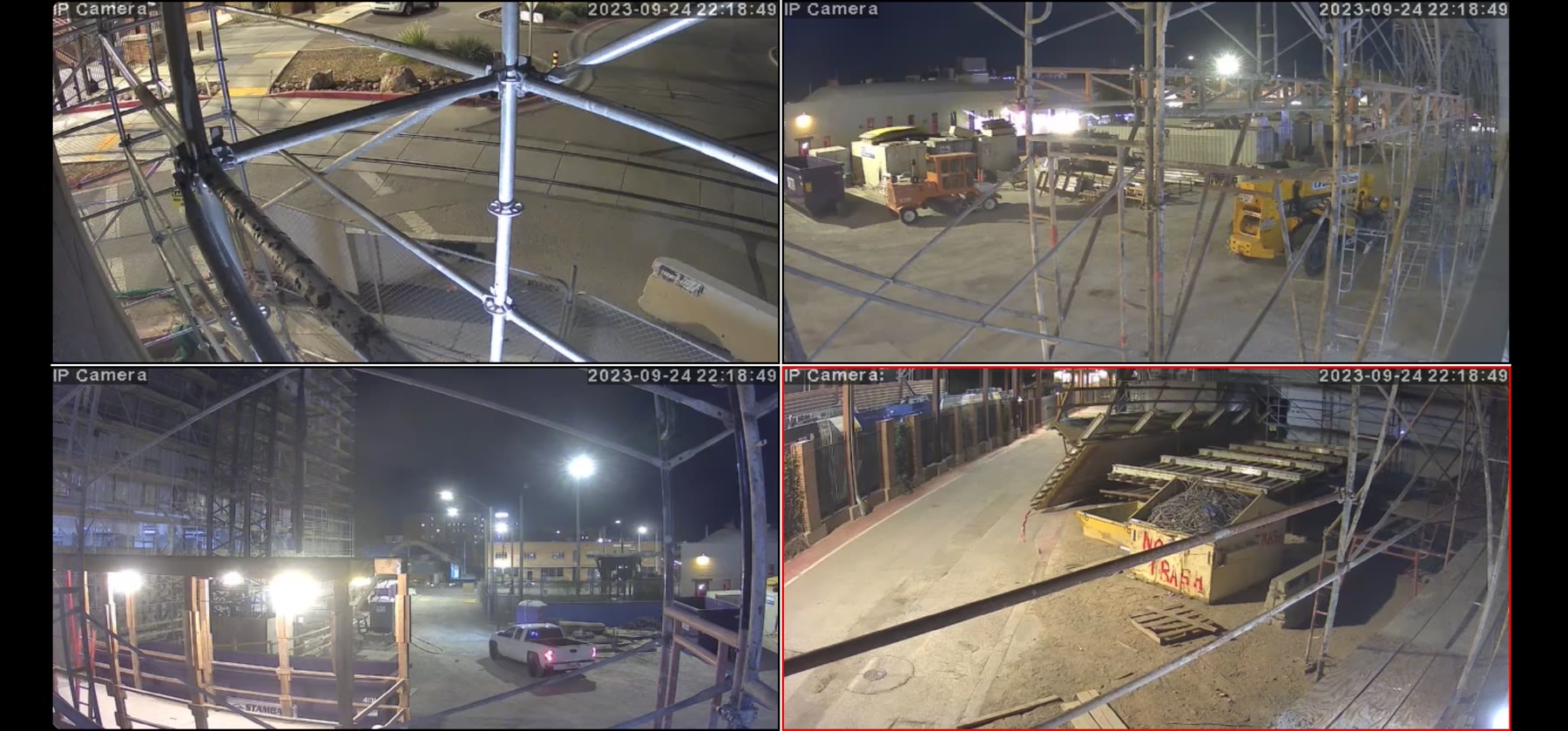
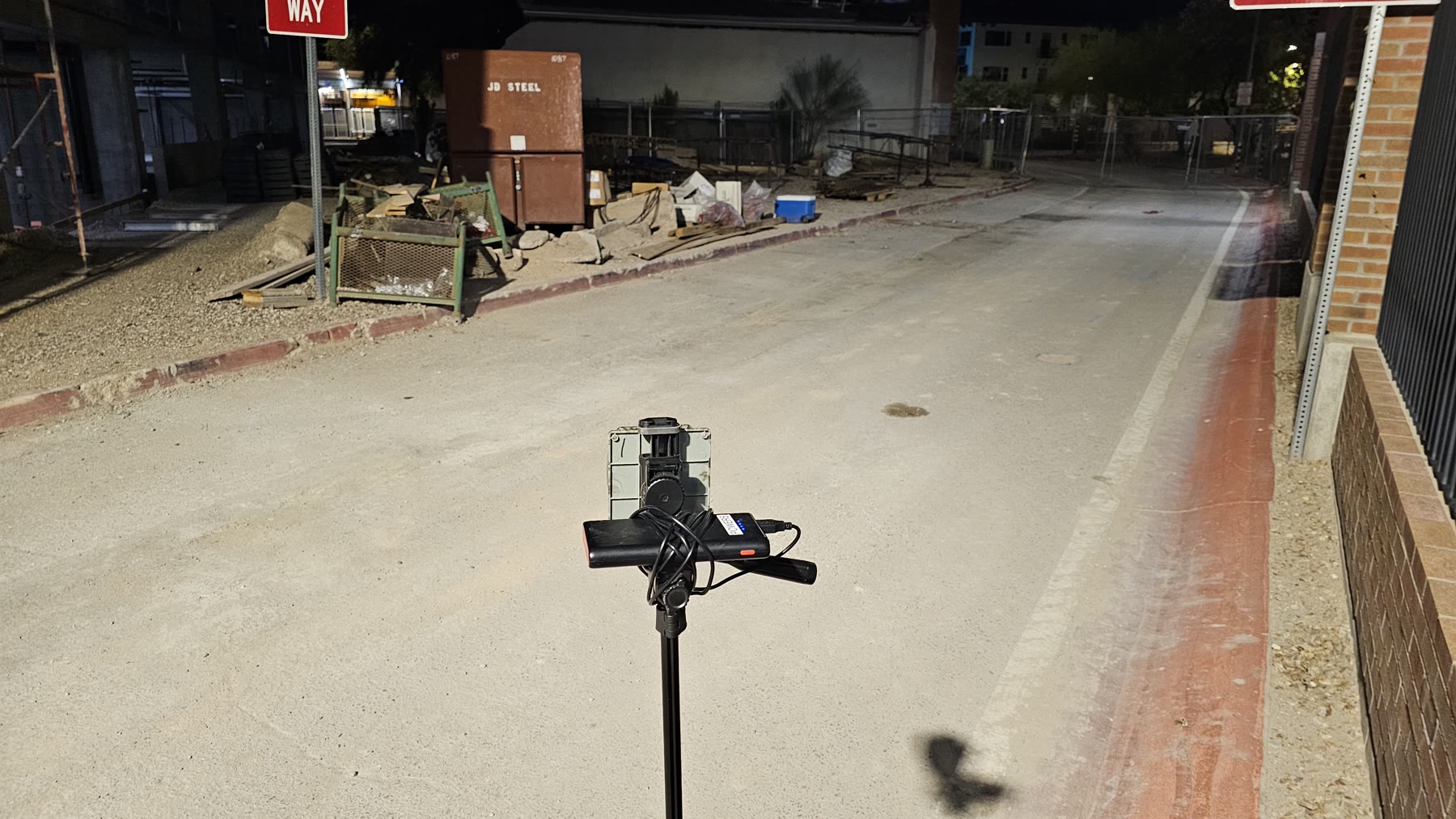
Privateer credits the outcome to an integrated operating model. Video surveillance expanded what an officer could observe across the vertical and constantly changing site. Privateer-developed motion sensors—the small camouflaged units shown below—could be placed on stands to establish temporary detection perimeters as construction changed the site’s boundaries and access routes. Trained Privateers verified activity, responded in person when necessary, and documented the result.
The technology did not replace officers or make judgment automatic. A camera or motion sensor could call attention to activity, but an officer still had to determine whether it was a contractor working late, a member of the public at the wrong gate, a person attempting to cross the fence, or an event requiring emergency assistance.
Temporary perimeter sensing
Privateer-developed motion sensors could be repositioned as the jobsite evolved, adding a detection layer around changing approaches and temporary boundaries.
Officer verification
Trained personnel evaluated what the cameras showed, made contact when appropriate, and avoided treating every movement as the same kind of event.
Active patrol
Patrols placed officers throughout the site instead of leaving the security program dependent on a gate or a passive video feed.
Documented outcomes
Activity, interventions, and exceptions were recorded so the client had an operational history rather than an unverifiable claim that the site was quiet.
Two minor thefts, neither caused by an outside perimeter breach
Accurate reporting requires acknowledging the two minor thefts recorded during the contract. According to Privateer’s internal project record, both involved people who were already authorized to be on the property. They were not attributed to the near-daily trespassers attempting to enter from Fourth Avenue.
The distinction matters because perimeter security and internal access control address different risks. The exterior operation prevented attempted intrusions from becoming major thefts, injuries, or disruptions. The two internal-access incidents remained limited and did not create a major loss or schedule delay.
Across the completed assignment, Privateer recorded no major theft, no injury arising from a security encounter, and no major security incident that delayed Opus Design Build’s work. That result held through excavation, vertical construction, interior buildout, and the transition toward resident move-in.
Project sources
The sources below document Ari on Fourth’s developer and design-builder, size, location, completion, critical schedule, opening, neighborhood setting, and adjacent nightlife. Privateer’s security results, trespass history, theft classifications, and historical field photographs come from the company’s project records.
- The Opus Group: Ari on Fourth project profile and July 2024 completion
- The Opus Group: Ari on Fourth leasing and project details
- American Concrete Institute: Ari on Fourth project case study, prime contractor, and critical schedule
- BizTucson: $130 million Ari on Fourth opening and on-time delivery
- City of Tucson: 211 North Fourth Avenue development and occupancy records
- Arizona Daily Star: Ari on Fourth grand opening, residential details, and location beside O’Malley’s
- Visit Tucson: Historic Fourth Avenue district and nightlife
- The Opus Group: Ari on Fourth’s Fourth Avenue setting and Joe Pagac mural