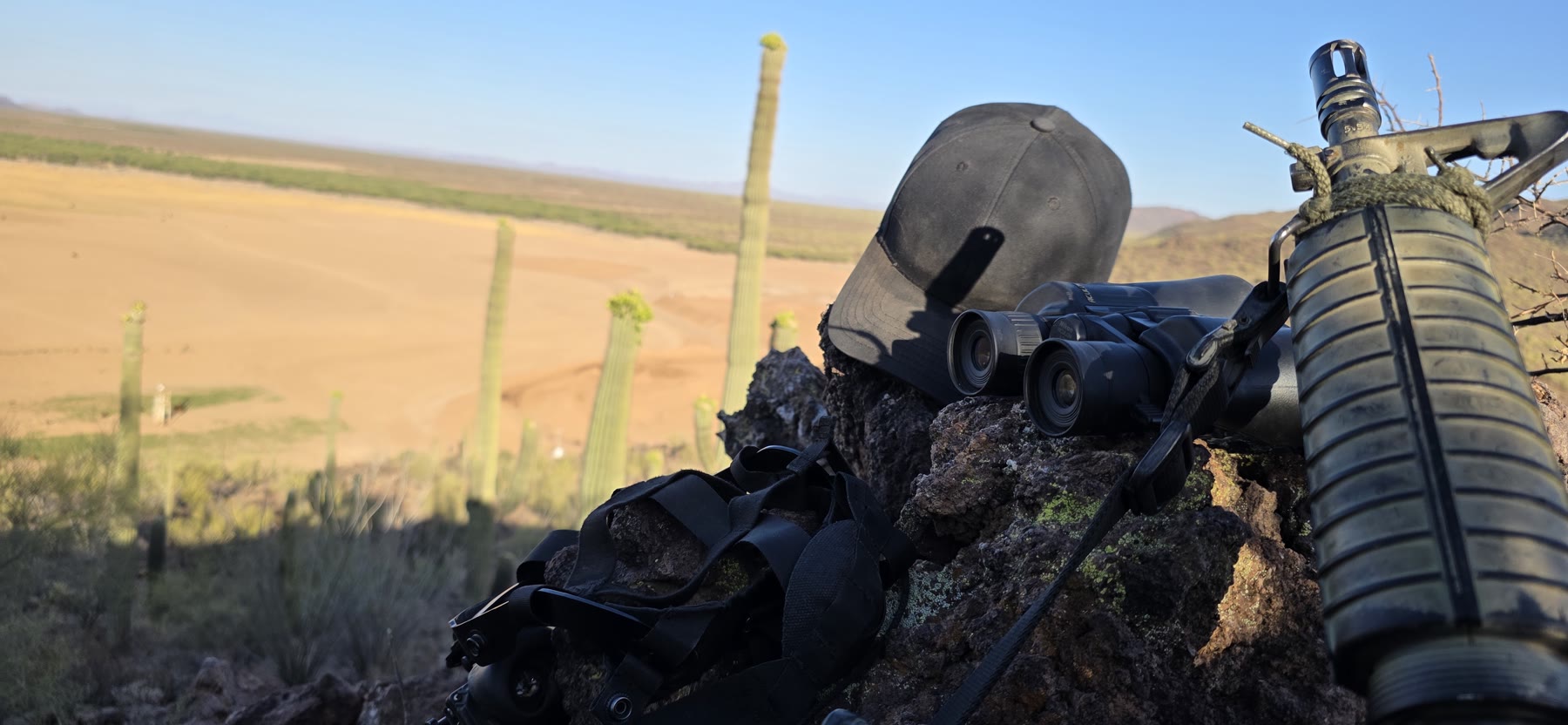
ALI CHUK, Arizona — Multiple gunshots broke across the desert shortly after nightfall while WestLand Resources biologists and survey personnel worked near the Menager’s Dam construction project. A Privateer Security Forces officer moved toward the sound, warned the field team, placed himself between the team and the reported direction of fire, and coordinated a protected withdrawal.
No shooter was visible. No one in the protected group was injured. The Privateer officer did not return fire. The operational objective was not to chase an unseen gunman through open desert; it was to prevent the environmental team from becoming trapped or exposed while the source and intent of the gunfire remained unknown.
The account is drawn from two entries made by the responding officer in Privateer’s Full Sail incident-reporting system. An initial entry placed the shots at approximately 7:30 p.m.; a later, fuller entry gave approximately 8:12 p.m. Because the records differ, this report describes the event as occurring shortly after nightfall rather than claim false precision.
Four decisions moved the team out of danger
Gunfire from the northeast changed the mission
The officer was providing overwatch for the survey team when multiple shots sounded from the northeast side of the dam. He moved toward the reported source but could not see a shooter. He then contacted the WestLand team, whose personnel confirmed that they had also heard the shots.
With no reliable target and no reason to escalate blindly, the officer shifted from observation to close protection. He positioned himself between the field team and the last reported direction of the gunfire, organized the withdrawal, and remained in the area while law-enforcement response was pending.
The team left intact. Privateer’s incident records contain no victim, medical, or injury entry for the event. They also record no exchange of gunfire involving the officer.
TOPD officers later described a suspected smuggling motive
In a later verbal follow-up, Tohono O’odham Police Department officers told Privateer personnel that the gunfire was likely directed generally toward the Privateer and WestLand position. Their assessment was that the shots were intended to drive the group from the area so narcotics could be moved through it.
TOPD officers also reportedly found cartridge cases on a nearby roadway and described them to Privateer as 7.62 mm. The officers presented that recovery as evidence related to the incident. Without a documented ballistic comparison, however, the cases alone do not establish a shooter, a weapon, a precise trajectory, or a specific target.
That distinction matters. The suspected smuggling motive and the general direction of fire are later law-enforcement assessments relayed verbally to Privateer. The contemporaneous incident reports establish that multiple shots were heard, the WestLand team independently confirmed hearing them, and the officer responded without seeing a shooter. Privateer has not reviewed a TOPD laboratory report, cartridge-case record, or trajectory analysis that would convert the officers’ assessment into a conclusive ballistic finding.
The shooting followed days of documented concern
The event did not occur in an ordinary construction environment. Privateer was protecting WCA Construction’s Menager’s Dam project in remote border terrain where security personnel coordinated with both TOPD and U.S. Customs and Border Protection.
Four days before the gunfire, CBP agents asked Privateer personnel to watch a hillside south of the project. The following day, a Privateer officer observed a suspected cartel scout at a fortified position on the southern ridge and relayed the location to CBP. That earlier observation heightened concern in the area, but the company record does not establish that the suspected scout was connected to the May 20 gunfire. The scout was reported south of the project; the shots were reported northeast of the dam.
Keeping those facts separate is essential. The broader conditions explain why the officer treated the sound as a credible threat. They do not identify who fired the shots.
Armed overwatch did not mean firing back
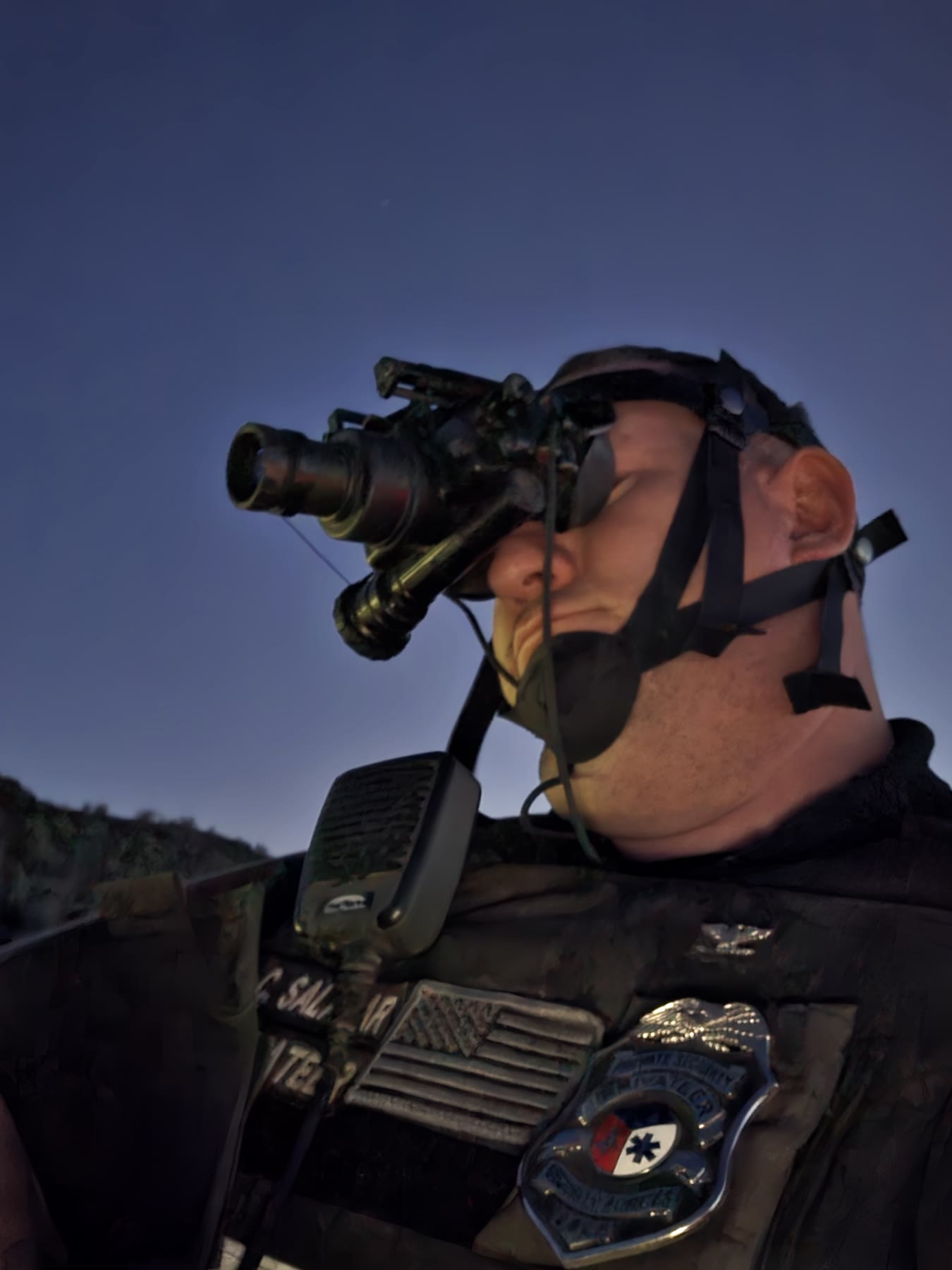
The assignment placed an officer in open desert with long sightlines, difficult terrain, limited cover, and darkness approaching. Binoculars and night vision extended what the officer could observe. An authorized rifle provided defensive capability appropriate to the site’s risk profile. None of those tools replaced the harder requirement: knowing what could and could not be established in the moment.
Firing toward a sound without a verified threat would have created a new danger. Leaving the environmental team exposed while searching for a shooter would have abandoned the protective mission. The officer instead used position, communication, and movement to reduce risk.
The officer did not need to identify the shooter to make the correct decision. The immediate problem was protecting people in open terrain while the source of the gunfire remained unknown.
Elevated observation
Overwatch gave the officer a broader view of the field team and the surrounding terrain before the incident changed the mission.
Immediate warning
The officer alerted the survey team, received confirmation that its members had heard the shots, and coordinated movement.
Protective position
He moved between the team and the reported direction of fire rather than leave the group exposed while pursuing an unseen person.
Controlled withdrawal
The environmental team was escorted out without a casualty, injury, or exchange of gunfire by Privateer.
Everyone came home
The result was measured in people, not rounds fired. The WestLand team withdrew safely. The Privateer officer recorded no injury, no casualty, and no need to use force. The survey personnel indicated that they wanted to return once the area could be secured.
The operation also demonstrates why Privateer’s wider Menager’s Dam security assignment cannot be reduced to a guard at a gate. The contract required relationships with the people of Ali Chuk, coordination with tribal and federal law enforcement, disciplined reporting, and the ability to protect specialized civilian personnel when a routine field assignment changed without warning.
Privateer remained with WCA Construction’s project through completion. The full contract closed with zero casualties, zero thefts, and zero security-related safety incidents.
Records and public context
The incident sequence and outcome come from Privateer’s contemporaneous Full Sail reports. The suspected motive, general direction of fire, and reported 7.62 mm cartridge cases are attributed to a later verbal follow-up from TOPD officers. The public sources below document the project, the agencies, and the environmental work represented at the site.
- U.S. Indian Affairs: Menager’s Dam replacement project and public-safety purpose
- WestLand Resources: Arizona environmental, biological, engineering, and cultural-resource services
- WestLand Resources: environmental field surveys and ecological-resource services
- Tohono O’odham Nation: Police Department
- Privateer Operational Report: Menager’s Dam security assignment completed with zero losses