A business owner facing a credible threat of violence is buying something very specific when they hire security: a capable person who is there, understands the assignment, and can help protect the people in front of them.
The building matters. So do the equipment, the gates, and the inventory. But when an employee is threatened, a confrontation becomes violent, or an armed attacker enters a property, the immediate concern is human life. A security program has to be designed around that responsibility.
That changes how we should discuss training. The useful question is whether an officer can recognize danger early, make a lawful decision, communicate clearly, and respond effectively under pressure. Answering it requires looking beyond the certificate earned at the start of a career.
Protection is a job of its own
Police carry a broad public mandate. They respond to emergencies, investigate crimes, enforce laws, and carry out duties across an entire community. A dedicated security assignment concentrates attention on a defined place, the people using it, and the risks the client needs addressed.
That concentration matters. A workplace dealing with threats needs someone who understands its entrances, staff routines, communication plan, and response procedures. A residential community needs officers who can recognize an escalating encounter, help residents move away from danger, and give responding agencies useful information. A site exposed to civil disturbance needs a plan for access, evacuation, and protection of the people inside.
An active attack makes the importance of presence especially clear. A call for help starts a response; the people already at the scene still have decisions to make before additional help arrives. Dedicated on-site coverage places a trained officer at the property during the contracted hours. A mobile patrol provides intermittent coverage. Those are different services, and the protection plan must account for the difference.
Security and public emergency services need to work together. The value of a dedicated protective role is the attention, preparation, and capability it brings to the specific assignment.
The minimum credential is a floor
Arizona DPS identifies an eight-hour unarmed pre-assignment course, a separate sixteen-hour initial armed course, and annual eight-hour armed refresher training. Those are licensing requirements. A company still has to decide how much preparation its actual assignments demand. DPS publishes the security-guard training requirements here.
Privateer’s published academy standard is two weeks and 80 hours, followed by monthly education. Its academy curriculum describes law and decision-making, scenario exercises, fieldcraft, firearms, use of force, de-escalation, and crisis response. The objective is to prepare officers for a protective assignment that may require both restraint and decisive action.
Police training is substantially longer at entry. AZPOST describes a 672-hour basic curriculum, and Tucson Police describes a program extending over many weeks before field training. That broader preparation reflects the breadth of police responsibilities.
Academy length answers a question about initial preparation. A client also needs an answer about present readiness: what has this officer practiced recently, how was performance assessed, and how does that training relate to the work?
Readiness has to be maintained
Privateer’s published model combines an 80-hour initial academy with monthly education across law, tactics, physical readiness, communications, and technology. Recurring training makes professional development part of the job after the first assignment.
Passing a test and preparing for a crisis serve different purposes
A firearms qualification establishes whether someone meets a defined standard on a defined course. A protective assignment also demands threat recognition, judgment about whether force is justified, awareness of bystanders, communication with other officers, and coordination when police arrive.
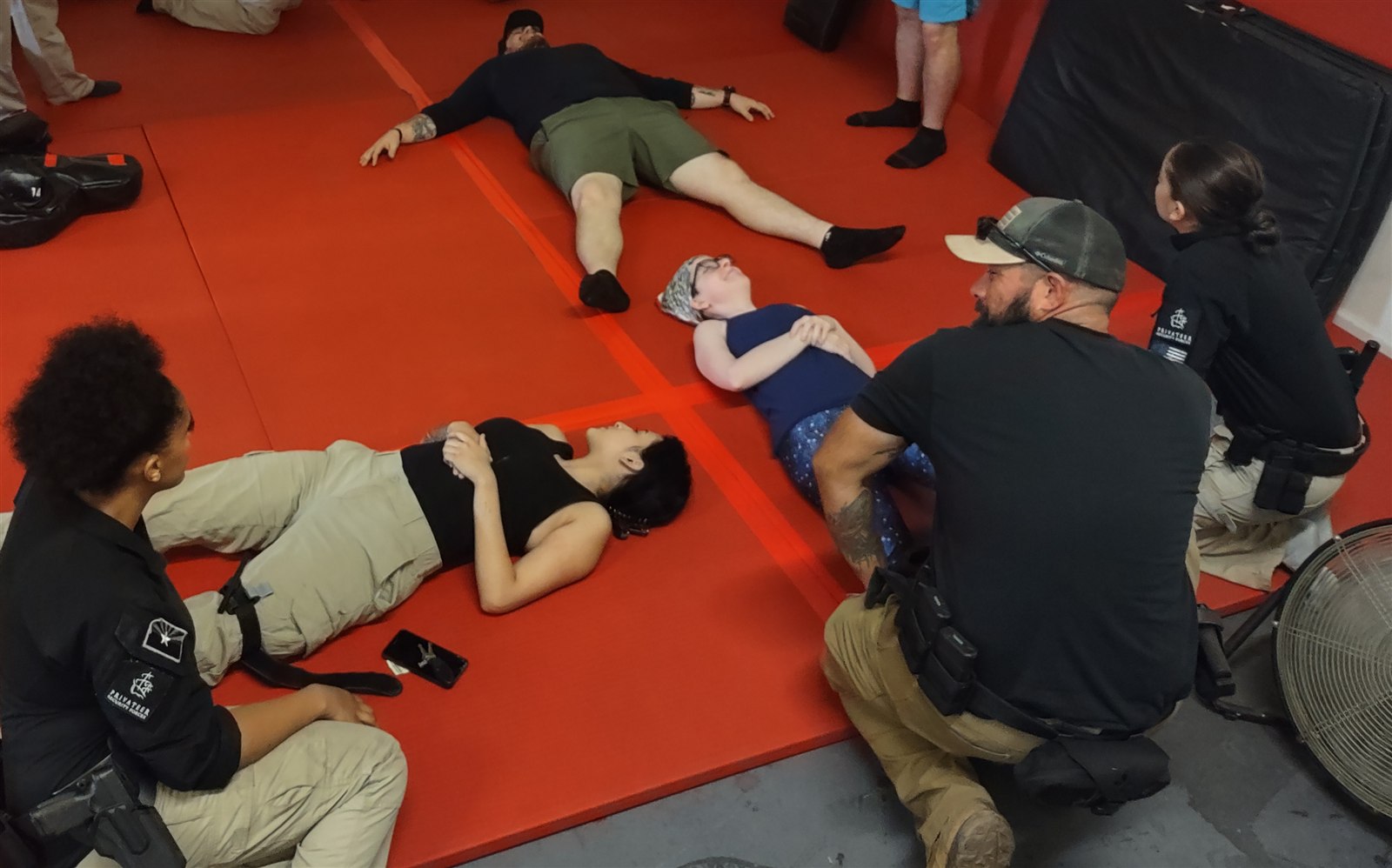
The same distinction applies to physical skills. Knowing a technique is useful. Being able to communicate, move, maintain control, and make sound decisions during a difficult encounter requires practice. Training must also reinforce when to create distance, move people to safety, call for assistance, or disengage.
Arizona police have ongoing requirements as well. R13-4-111 requires twelve hours of annual training for full-authority and specialty peace officers, plus annual firearms qualification for officers authorized to carry. Those requirements establish a minimum; they do not tell us how often a particular department or officer actually trains.
For a client choosing protection, the practical standard should be demanding: regular training connected to the assignment, observable performance, and a process for addressing weaknesses. A provider should be able to explain what it requires and show how it follows through.
Protecting people takes more than weapons training
Some threats require the capacity to stop violence. Many encounters are handled through observation, a calm conversation, early intervention, controlled access, or getting someone out of danger. Officers need the judgment to recognize which response the circumstances call for.
Privateer’s documented continuing-education review identified 25 topics across 23 categories. Subjects included legal authority, suspicious-activity reporting, domestic-violence response, firearms, defensive tactics, physical readiness, heat safety, tracking, evidence handling, reporting, and operational systems. The review distinguishes historical, current, planned, and evidence-limited material.
That breadth reflects the work. An officer may need to recognize a threat, communicate its location, help people leave the area, provide assistance within their training, and preserve an accurate account afterward. Each part affects the quality of the protective response.
Physical capability and restraint belong in the same training program. So do firearms proficiency and lawful judgment. The purpose is to give an officer useful options and the discipline to choose appropriately.
Expect evidence of preparation
Clients should ask a provider to connect its training claims to the proposed assignment. Useful questions include:
- What must officers complete before working independently?
- What continuing training is required, and how is completion recorded?
- How are judgment, communication, firearms, and physical skills assessed?
- How will officers learn this property’s risks, emergency procedures, and post orders?
- What coverage is actually present, and what happens when additional help is needed?
- How are incidents, evidence, and lessons from the field reviewed?
Privateer connects its field work to reports, body-camera and dashcam evidence, supervision, and Full Sail. These records give clients visibility and provide material for reviewing decisions after an encounter. Training should inform the operation, and experience from the operation should inform future training.
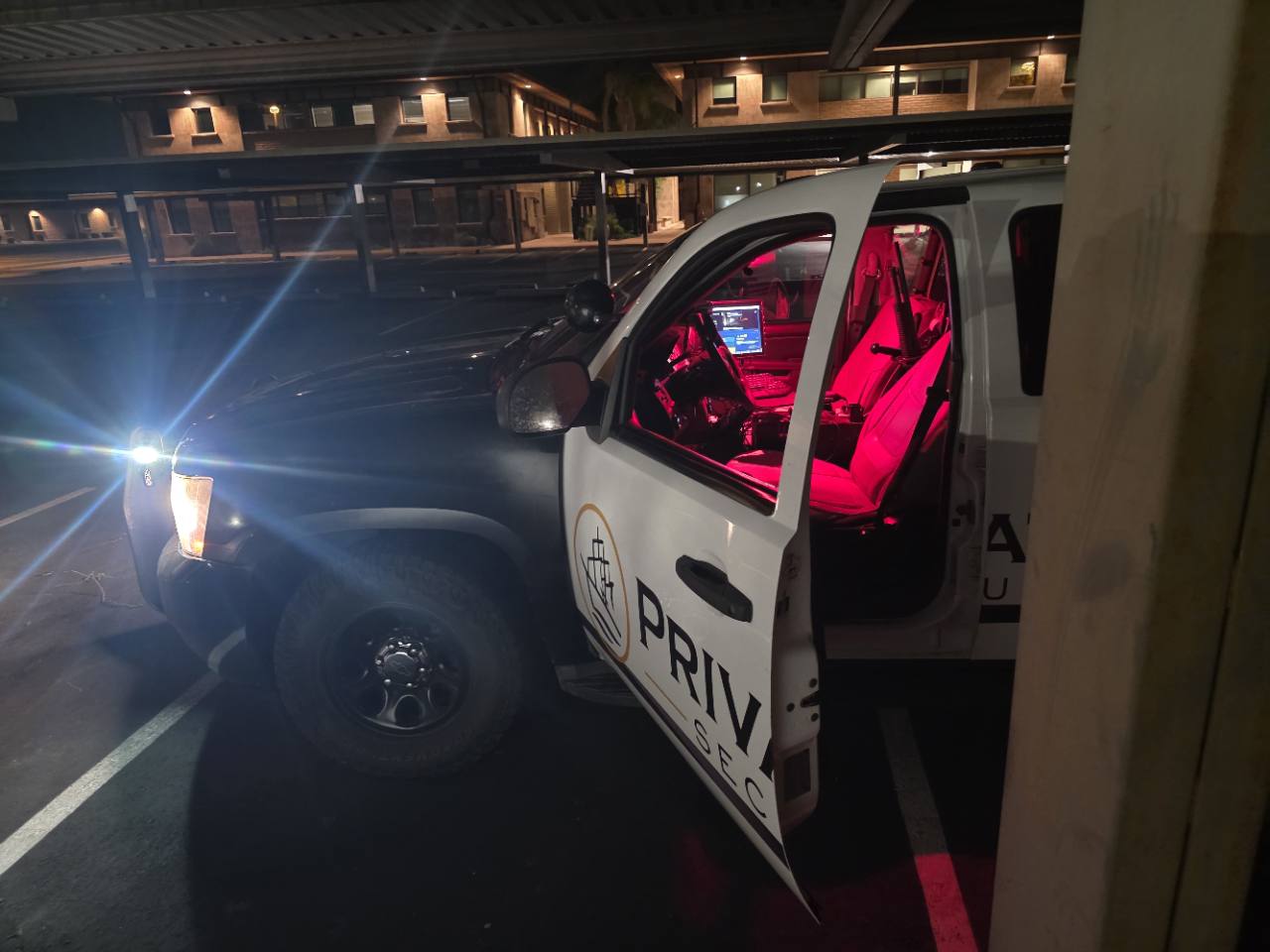
People hire security because they need protection where they live, work, and gather. They deserve a provider that treats that responsibility as continuing professional work: prepare officers, keep practicing, understand the assignment, and account for the response.
The academy starts the work. Protecting people is the reason to keep doing it.
Training standards behind this commentary
- Arizona DPS: security-guard licensing and training
- AZPOST: basic training curriculum
- Arizona Administrative Code: R13-4-111 certification retention requirements
- Tucson Police: basic training program
- Privateer: academy curriculum and careers
- Privateer: published 80-hour academy and monthly education standard
- Privateer: documented continuing-education review