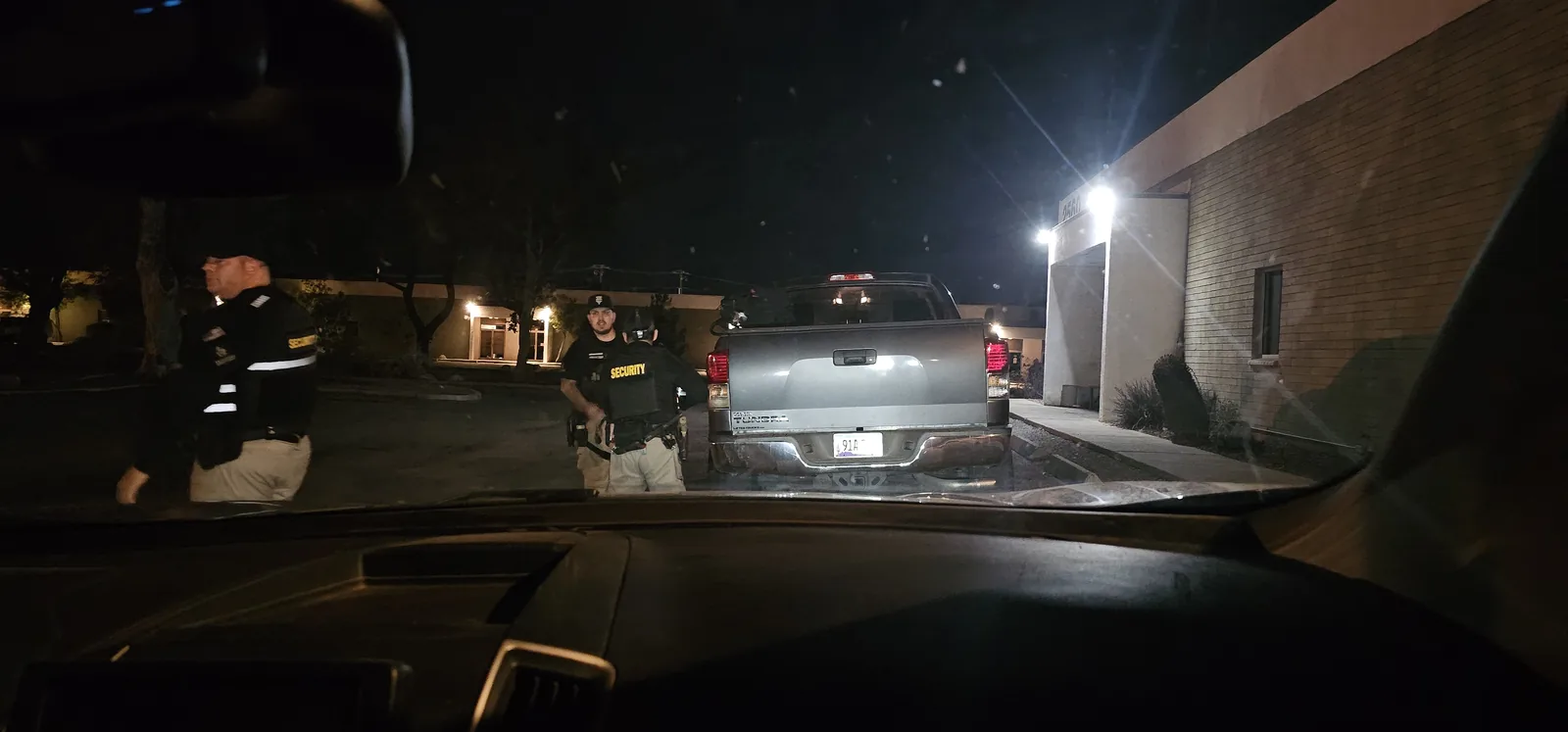
TUCSON, Arizona — Privateer Security Forces has completed a structured review of its internal continuing-education record, identifying 25 distinct training topics across 23 subject categories. The inventory covers years of assignments, refreshers, practical exercises, online courses, written guidance, assessments, and current or planned specialty training.
The review was designed to answer a simple question: what has Privateer actually asked its people to study, practice, refresh, or prepare for? Duplicate announcements were consolidated, source dates and context were preserved, and entries were classified according to the evidence available.
The result is not a claim that every topic is active today or that every announcement represents a completed certification. It is a documented account of the continuing-education subjects Privateer has used to develop officers beyond the minimum credential required to work a security post.
Breadth matters when the assignment can change without warning
Privateer’s record ranges from legal authority and suspicious-activity reporting to heat safety, night shooting, body-camera evidence, visual tracking, team operations, and contract-specific procedures.
Recognition comes before response
Security officers make decisions in the space between ordinary activity and an emerging threat. Privateer’s continuing education has included suspicious-activity reporting for private-sector security, operational-security awareness, domestic-violence response, types of border contact, criminal law, use of force, laws of arrest, and jurisprudence and case law.
These subjects reinforce that an officer’s authority is limited, context matters, and a lawful response begins with accurate observation. Training on recognition, reporting, and legal boundaries is just as important as the ability to act physically.
Privateer has also used online knowledge checks and critical-thinking exercises. One recent lesson used chess to develop anticipation, positioning, layered defense, asset protection, adaptability, and the habit of thinking beyond the next move.
Threat recognition
Suspicious behavior, operational-security risks, border contacts, and the circumstances that require escalation or reporting.
Legal boundaries
Criminal law, arrest authority, use of force, case law, and decision-making that protects people and preserves accountability.
Capability has to be practiced, not assumed
Privateer’s practical training record includes Rapid Assault Tactics, firearms range training and qualification, live fire in low-light conditions, flashlight management, visual tracking, team-based operations, physical-fitness test preparation, and heat acclimatization and hydration.
Those subjects reflect the environments officers actually encounter in Arizona. Heat can impair judgment before a confrontation occurs. Low light changes what an officer can see and communicate. Physical fatigue affects control, movement, and decision-making. Team tactics matter when one officer’s blind spot becomes another officer’s responsibility.
Firearms training is treated as one part of a larger readiness system. The documented record also emphasizes fitness, hand-to-hand survival skills, tracking, coordination, legal authority, and the discipline to avoid unnecessary escalation.
Good training includes what happens after the encounter
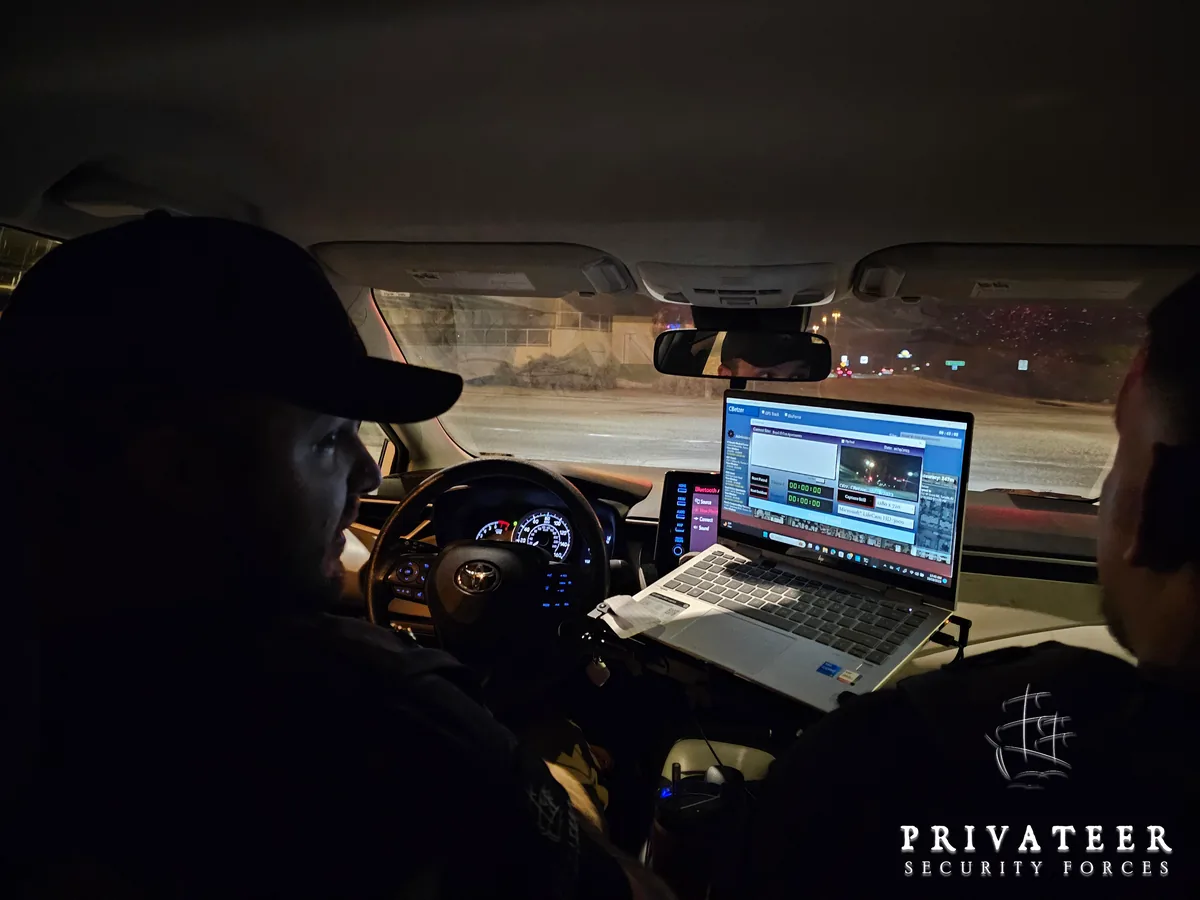
Privateer’s record extends beyond contact skills. Personnel have received instruction on attaching body-camera evidence to incident reports, checkpoint configuration and license-plate checking, traffic direction, basic security skills, orientation and professional standards, contract-specific procedures, and the Full Sail operational system.
That matters because a security event is not finished when the immediate problem ends. Reports, timestamps, video, photographs, notifications, patrol records, and property context determine whether a client can understand what happened and whether the company can defend the actions taken.
Training officers to use the same operational system that coordinates the work creates continuity between the field, dispatch, supervision, and the client record.
The curriculum changes as the mission changes
Some subjects are recurring, some are tied to a specific contract or period, and some represent the next capability Privateer is preparing to build. The reviewed inventory included announced certification and refresher requirements for selected HAZMAT Security Team members, while historical records document contract-specific instruction and earlier operational refreshers.
Privateer has since formalized a six-person FRO hazmat security team. Read how that training, new equipment and immediate field experience came together.
This is why Privateer does not describe the catalog as a fixed syllabus. Continuing education has to respond to new assignments, changing laws, emerging threats, lessons from the field, and gaps identified through supervision and reporting.
The company’s standard is to preserve that history without pretending every older item remains current. Historical entries are retained as evidence of use. Planned items are labeled as planned. Content that could not be fully recovered is identified rather than represented as a complete course.
Document the training. Test the lesson in the operation.
A long list is not valuable by itself. The purpose of continuing education is to produce better observation, safer decisions, clearer reports, stronger coordination, and a more reliable response for the people and property entrusted to Privateer.
Documented
Training topics are tied to source posts, dates, delivery methods, requirements, and available learning objectives.
Refreshed
Law, use of force, firearms, systems, reporting, and field skills require reinforcement rather than one-time exposure.
Practiced
Physical readiness, team movement, low-light work, tracking, and contact skills improve through realistic repetition.
Accountable
Reporting, evidence, supervision, and honest status labels keep the public claim aligned with the underlying record.
Privateer will continue expanding and refining the catalog as new training is assigned and older material is reviewed. The objective is not to create the appearance of readiness. It is to build officers who can recognize risk, work within the law, operate as a team, and explain what they did after the moment has passed.
Examples from the documented curriculum
Most internal assignments and source records are not public. The links below are public-facing resources that appeared in the reviewed continuing-education record.