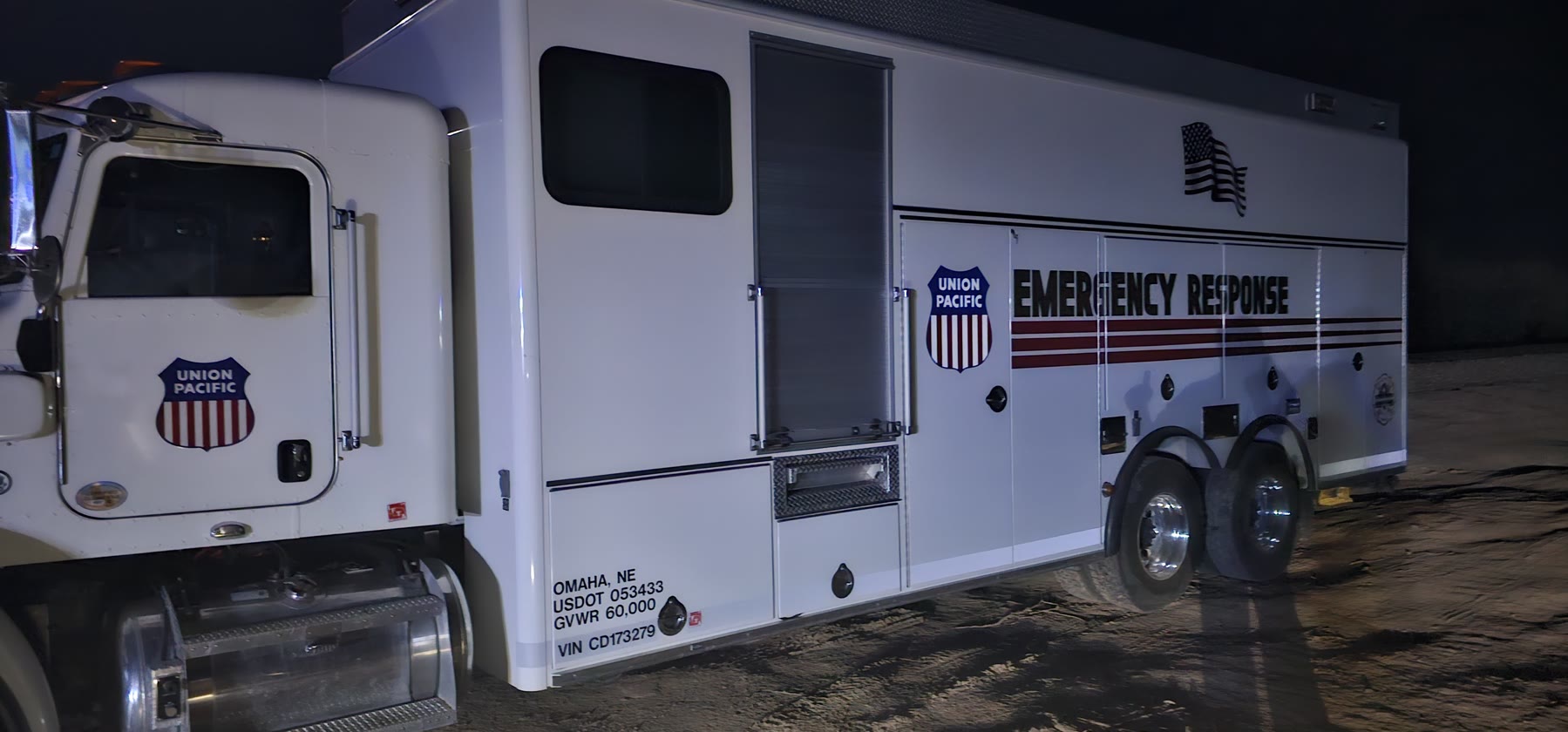
TUCSON, Arizona — Privateer Security Forces has trained a six-person FRO hazmat security team, added sealed new-in-package XRT protective suits, full-face gas masks and a portable Geiger counter to its readiness inventory, and then quickly gained new field experience during another railroad derailment response.
The sequence mattered. Training did not remain an abstract certificate on a wall. Almost immediately afterward, Privateer was called to another derailment, giving the newly qualified team real experience in a railroad emergency environment.
Privateers came away with new confidence in what they could contribute at a hazmat scene: recognizing hazards, holding the right ground, preventing avoidable exposure, communicating useful information and supporting the responsible command structure.
People, equipment and field experience came together
Privateer developed the capability around a defined security mission: protect people, property, access points, evacuation routes and recovery operations while trained hazmat professionals manage technical entry and release control.
The first derailment exposed a gap that ordinary security training could not fill
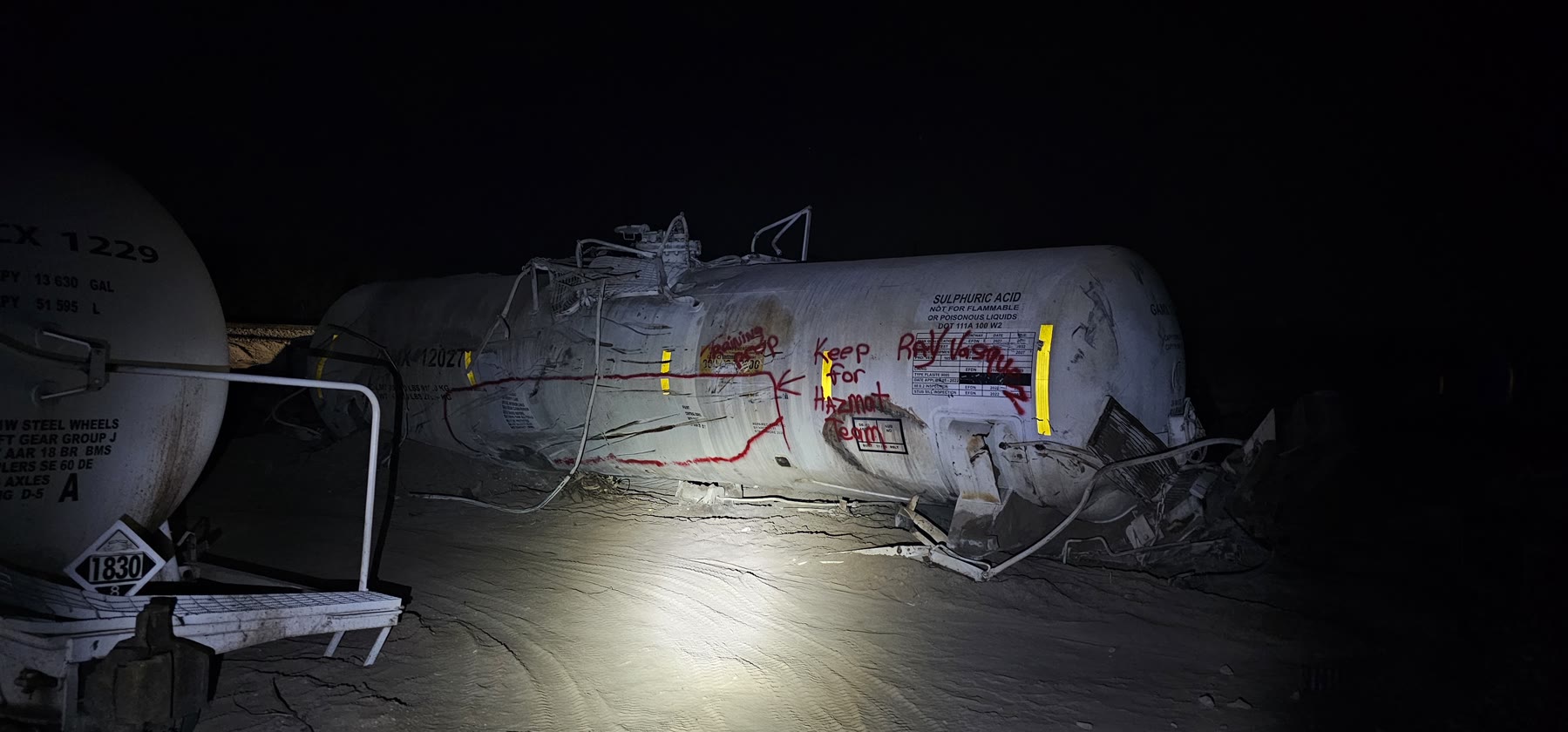
Privateer had already supported the restricted recovery environment after the October 2024 Union Pacific derailment near Green Valley and the release of sulfuric acid from damaged tank cars. Officers performed the security mission successfully, but the environment made one lesson unmistakable: a guard card alone does not teach an officer how hazardous-material incidents are identified, divided into control zones or managed through an incident-command structure.
Privateer responded by formalizing a deployable hazmat security team. Six operatives completed Hazardous Materials First Responder Operations coursework and separate DOT Hazmat Security Awareness coursework. The FRO curriculum included railroad-specific preparation: car types, reporting marks, placards, UN identification numbers, shipping documents and use of the Emergency Response Guidebook during the initial phase of a transportation incident.
Operations-level training made the security mission more informed and more useful
OSHA describes First Responder Operations personnel as responders who act defensively from a safe distance to protect nearby people, property or the environment. Their role includes preventing exposures and supporting basic control, containment or confinement within the capabilities of their resources and protective equipment.
For a security team, that distinction translates into practical value. FRO-trained Privateers can better recognize the hazard, understand why an isolation distance may change, protect an established control zone, deny unauthorized entry, preserve evacuation and staging routes, support basic decontamination procedures and communicate observations through the incident structure.
Each of the six current team members also holds a separate DOT Hazmat Security Awareness course-completion certificate. That preparation addresses transportation-security risks, possible security threats and methods used to strengthen security around hazardous materials in motion.
The team was equipped to put the training to work
Alongside the training, Privateer equipped the team with sealed new-in-package XRT protective suits, full-face respiratory-protection equipment commonly called gas masks, and a portable Geiger counter for radiation screening and awareness.
XRT protective suits
Six sealed, new-in-package chemical protective suits added to outfit the dedicated team for accepted FRO hazmat-security missions.
Full-face gas masks
Dedicated full-face respiratory protection that adds face, eye and filtered respiratory coverage when configured for an identified FRO assignment.
Geiger counter
A portable field-screening tool that gives the team immediate awareness of ionizing radiation and supports faster standoff, notification and coordination.
Together, the suits, masks and meter give the six-person team a more complete equipment package to accompany its FRO knowledge. Specific hazards and incident command determine selection and deployment, as they do with all hazmat equipment.
Another derailment followed almost immediately
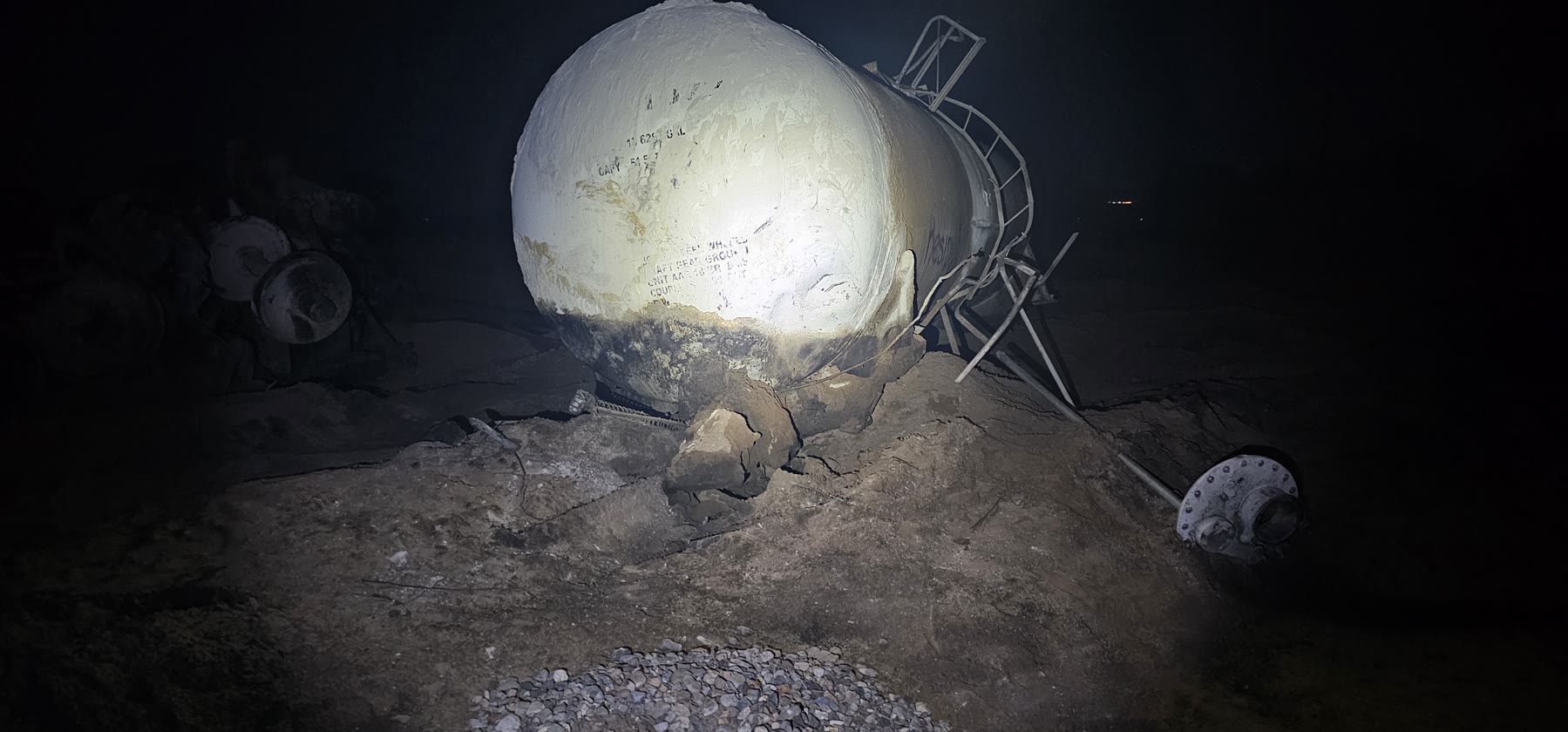
Soon after completing the new training and assembling the equipment, Privateer returned to a railroad recovery environment at another derailment. The call gave the team an immediate opportunity to connect its new FRO knowledge with the realities of an active field assignment.
The follow-on assignment gave Privateers something no classroom can fully reproduce: the pace, uncertainty, changing access requirements and operational friction of a real derailment scene. Team members arrived with a stronger mental model of railcar hazards, control zones, protective actions, technical-role boundaries and the questions security personnel should ask before taking a position.
That understanding made the team more useful to the broader mission. Officers could connect perimeter security to exposure prevention, recognize why responders or equipment needed protected movement, document changing field conditions and integrate their work with technical hazmat professionals.
The team felt more capable because it understood how to contribute
Before formal FRO preparation, a security officer at a hazardous scene could perform the assigned perimeter task while still lacking the language and framework used by the technical response. After training, Privateers could see how access control, isolation, communications, decontamination support and documentation connect to the safety of the entire operation.
The newfound confidence was practical. Team members were better prepared to recognize changing conditions, provide meaningful access and perimeter control, communicate in the language of the response, and help protect the people and equipment moving through the scene.
That is the usefulness Privateer set out to build: a security element that understands the environment well enough to strengthen the response without getting in the way of it.
Readiness is the combination of competence, equipment and experience
Privateer’s FRO hazmat security capability is designed for defensive support: hazard recognition, isolation, denied entry, exposure prevention, controlled access, route protection, evacuation and staging support, basic decontamination procedures, documentation and coordination with responsible authorities.
Privateer’s operations-level security role works alongside the qualified hazmat personnel responsible for technical entry, rescue and release control. That coordination lets each part of the response contribute where it is strongest.
Six trained Privateers, newly acquired equipment and immediate field experience did more than add another service description. Together, they changed how the team understood its place on a hazardous scene—and how much useful work disciplined security can perform there.