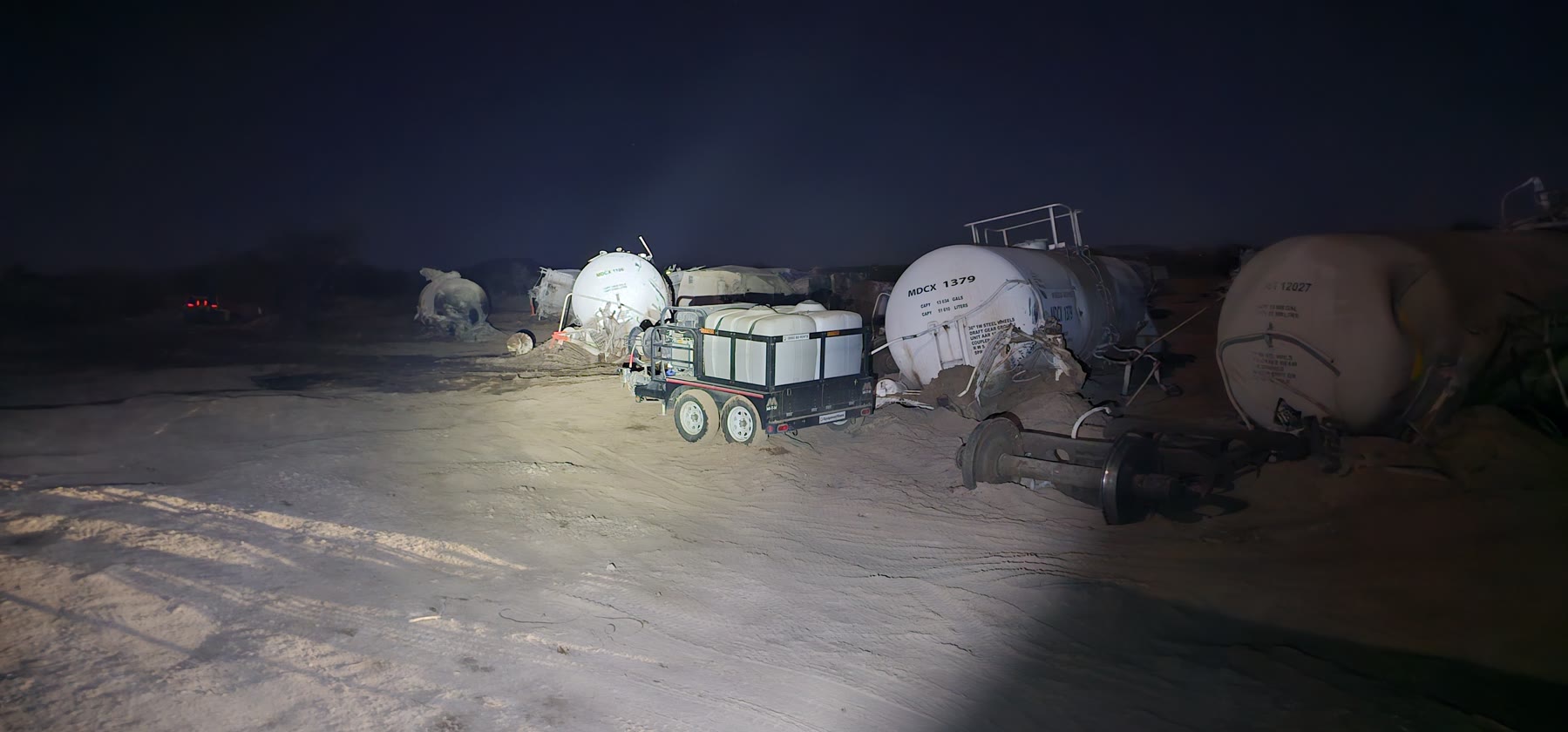
GREEN VALLEY, Arizona — Privateer Security Forces supported Union Pacific Railroad Police during the hazardous recovery that followed the October 11, 2024 train derailment near Canoa Ranch, maintaining a controlled perimeter with no unauthorized breaches and no security-related injuries.
The assignment placed Privateer officers beside damaged tank cars, heavy recovery equipment, hazardous-material crews, and contaminated ground. News organizations were actively covering the derailment, and company records document repeated interest in gaining a closer view. Privateer’s responsibility was to preserve access for authorized responders while keeping everyone else outside the safety perimeter.
That access-control record remained intact. Privateer documented no member of the public, media, or other unauthorized party entering the restricted scene during its deployment. No security officer or other person was injured in a security encounter, and no perimeter incident interrupted the railroad’s recovery work.
A hazardous scene held without a breach
Privateer’s role was not chemical remediation. It was to create the controlled operating space in which railroad police, hazardous-material specialists, recovery crews, and public agencies could perform their work without an unauthorized person entering a dangerous area.
Twenty-four cars derailed near Canoa Ranch
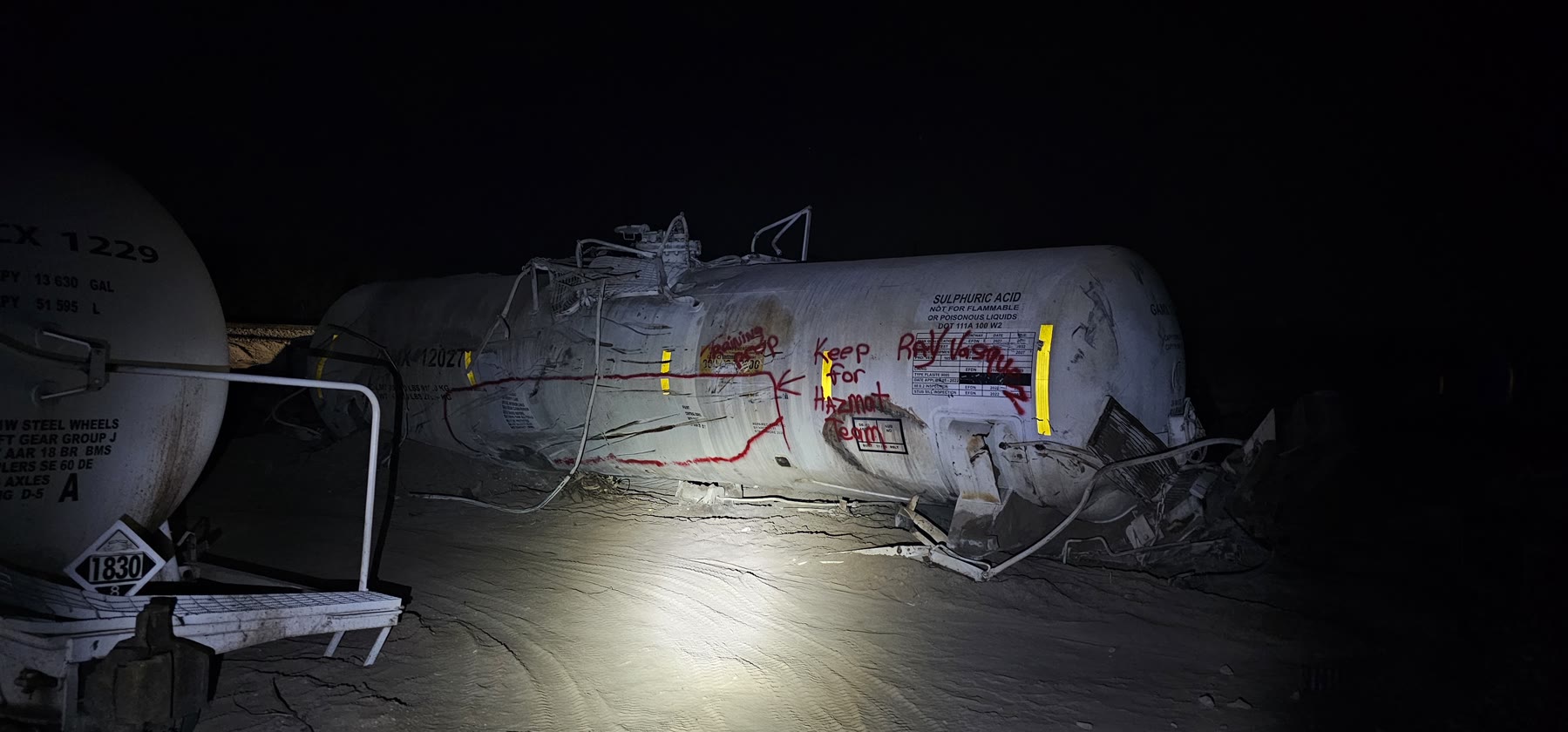
Pima County’s October 14 incident report says the derailment occurred at approximately 10:30 a.m. on October 11 on county-owned conservation property near Canoa Ranch. Twenty-four railcars derailed; 20 were tankers carrying sulfuric acid, and three ruptured.
The county’s initial report estimated that 30,000 gallons of sulfuric acid spilled. A later Arizona Department of Environmental Quality site summary estimated approximately 36,000 gallons and described a release area about 600 feet long. Reporting the range preserves the difference between the early response estimate and the later environmental record.
The county said Union Pacific led the immediate response, which included clearing a work area, building a berm to contain spill material, and moving damaged railcars. Emergency officials maintained readiness for a shelter-in-place or evacuation alert, but neither was issued. Contemporary reporting also said no injuries were reported during the initial derailment response.
Access control under railroad-police authority
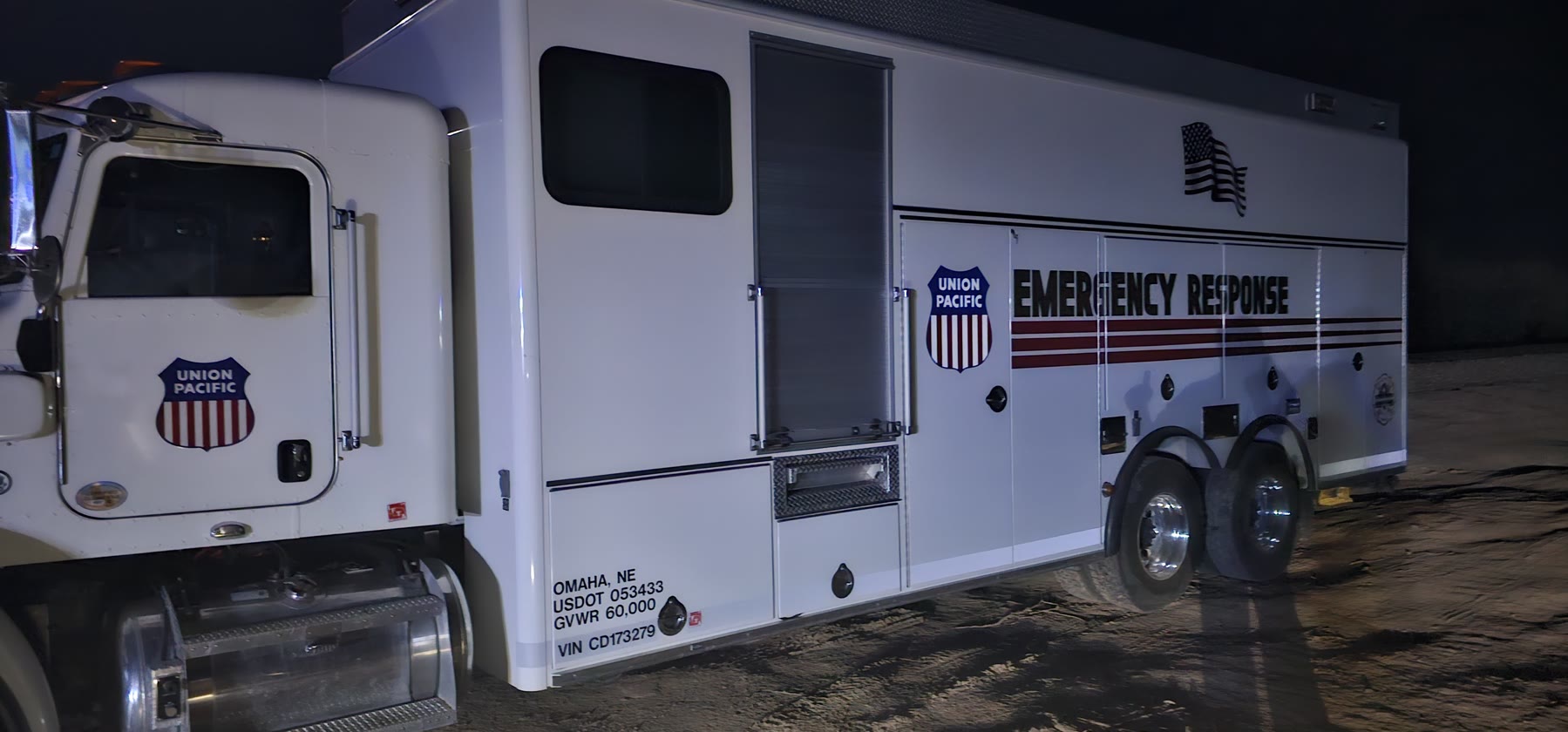
Privateer operated at the direction of Union Pacific Railroad Police. That chain of authority mattered: a hazardous recovery scene cannot tolerate conflicting instructions, informal exceptions, or uncertainty about who is permitted beyond the perimeter.
Officers maintained the restricted boundary, checked access, protected clear movement for response and recovery personnel, and denied entry to unauthorized people. Exact post locations, staffing levels, and response procedures are not published.
Media attention created a distinct challenge. Journalists had a legitimate public-interest reason to report on the derailment, but no press credential could eliminate the chemical, equipment, or unstable-wreckage hazards inside the restricted area. Privateer applied the authorized perimeter consistently while leaving public communication to Union Pacific and responding agencies.
Controlled access
Entry remained limited to people authorized for the railroad, recovery, environmental, or public-safety mission.
Clear responder movement
The security boundary protected working routes needed by railroad police, hazardous-material teams, and heavy recovery equipment.
Consistent enforcement
Public interest, media attention, and nighttime activity did not change who was permitted inside the restricted scene.
Documented outcome
Privateer’s contract record closed with zero unauthorized breaches and zero security-related injuries.
Security inside a changing industrial hazard zone
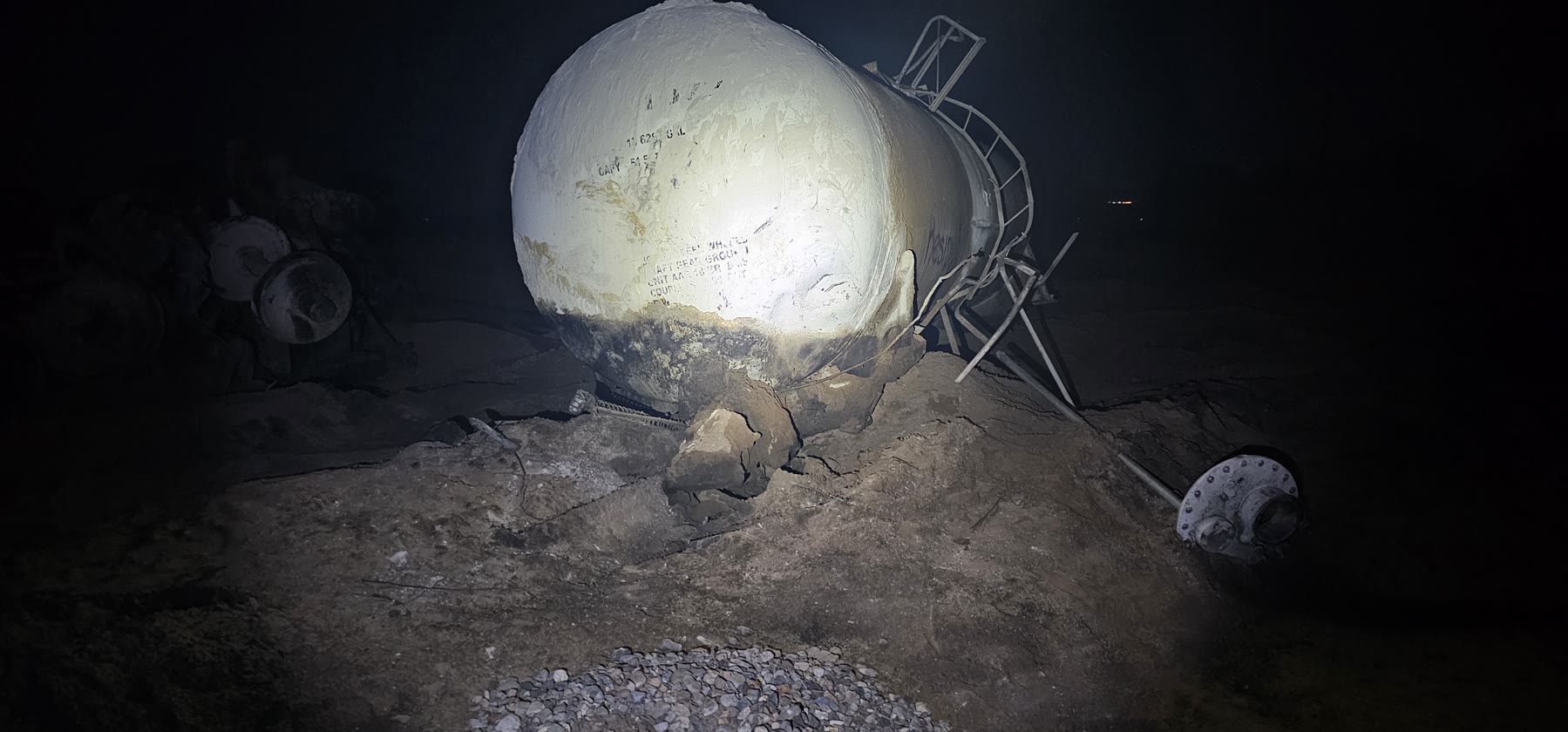
The risk was larger than the chemical label on any single car. Officers worked at night around displaced rail equipment, uneven and disturbed ground, vehicle movement, temporary recovery infrastructure, and areas managed for contamination. Scene conditions changed as damaged cars were stabilized, product was transferred, and equipment moved through the site.
Maintaining safety required disciplined boundaries. Privateer officers did not enter work areas simply to obtain a closer view and did not interfere with the hazardous-material mission. They remained accountable to the site’s safety controls and the direction of railroad police while continuing to protect the perimeter.
What the zero-injury record means
Public agencies and local news organizations reported no injuries during the initial derailment response. Several days later, KOLD reported that two residents described symptoms they believed followed the spill; Union Pacific told the station that air monitoring had shown no public-safety concern relevant to air quality.
Privateer’s statement is deliberately narrower and independently supportable: no person was injured in a perimeter breach, confrontation, or other security incident during Privateer’s deployment, and no Privateer officer recorded a security-related injury. It is not an environmental-health conclusion and does not replace the continuing work of environmental regulators.
ADEQ’s later record confirms that sulfuric-acid-impacted soil required further delineation, excavation, and removal. Securing the emergency and recovery scene was a successful assignment; environmental remediation is a separate, longer process.
Experience at Green Valley now informs formal railroad hazmat preparation and live railcar intelligence
Following the Green Valley assignment, Privateer formalized a deployable hazmat security team whose current operatives hold separate Hazardous Materials First Responder Operations and DOT Hazmat Security Awareness course-completion certificates. The FRO curriculum includes railcar types, reporting marks and car numbers, placard and UN-number identification, pressure tank-car hazards, railroad waybills and consists, and use of the 2024 Emergency Response Guidebook.
Railroad-specific defensive preparation
The team is prepared to recognize railcar and hazardous-material indicators, establish assigned isolation and access-control areas, prevent avoidable exposure, and relay better field information through railroad police and incident command.
Review training and qualificationsCritical Sites railcar records
Privateer’s live workflow can capture a railcar’s photographs, GPS location, timestamp, reporting mark, condition, risk level, and notes, then update the same record as later patrols observe the car elsewhere on the site.
Explore live railcar intelligencePublic record and reporting
The sources below document the derailment, chemical release, emergency response, public warnings, initial injury reporting, and subsequent environmental work. Privateer’s role and security results come from its project record.
- Pima County: October 14, 2024 report on the Union Pacific derailment at Canoa Ranch
- Arizona Department of Environmental Quality: UPRR Green Valley remediation site summary
- KOLD 13 News: initial derailment response, public warning, and no-injury report
- KGUN 9: Pima County spill estimate, containment berm, and recovery details
- Arizona’s Family: October 11 emergency response and initial public-safety reporting
- KOLD 13 News: resident symptom reports and Union Pacific air-monitoring statement