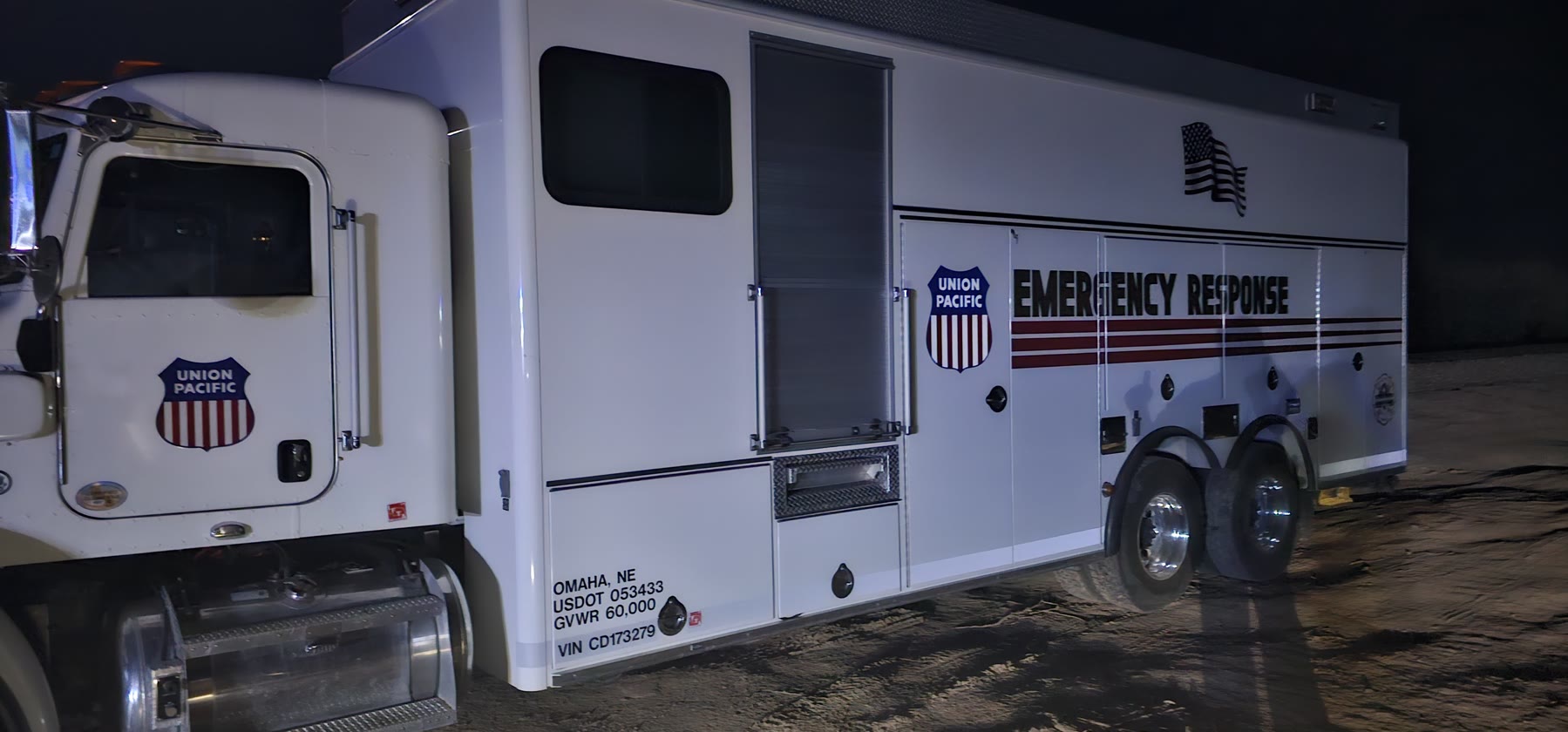
TUCSON, Arizona — Privateer Security Forces proudly declares its continuing role as a permanent security vendor for Union Pacific Railroad. The relationship places Privateer within a standing response system, prepared to protect derailment and recovery sites when railcars, cargo, equipment, responders, and the surrounding public require disciplined security on the ground.
This is not the story of one emergency or one purchase order. It is an enduring vendor relationship built on readiness, repeat performance, and trust. Union Pacific Railroad Police establish the security requirement. Privateer deploys the personnel, field leadership, equipment, communications, and documentation needed to carry that requirement across the scene.
The relationship is modern. The tradition behind it is much older.
A standing force for moments when the railroad cannot wait
When broken rail leaves cars stranded and valuable property exposed, Privateer can be called to establish control, preserve access for recovery personnel, deter interference, document activity, and remain until the railroad’s mission is complete.
Before the railroad, there was the letter of marque
Long before black patrol vehicles crossed the Arizona desert at night, privateers sailed beyond the protection of a national fleet. They were privately owned vessels operating under government commissions known as letters of marque. Those commissions identified lawful enemy targets, defined the mission, and placed the private ship and its captain inside a legal framework.
American privateers carried that authority during the Revolution and the War of 1812. They pursued hostile commerce across enormous distances, operated far from immediate support, and answered for captured vessels before prize courts. Their value came from initiative and reach, but their legitimacy came from authorization and accountability.
The essential formula was clear: a lawful commission, a defined objective, a capable private force, and a permanent record against which the result could be judged.
Private protection followed American commerce west
As the country expanded, the frontier moved from open water to open land. Settlers, ranchers, miners, merchants, and freight operators carried livestock, payrolls, tools, machinery, and valuable cargo across isolated country. Distance created opportunity for trade; it also created opportunity for theft.
Private protection followed the value. Stockgrowers employed range detectives to investigate rustling and recover stolen herds. Merchants hired guards for payrolls and freight. Railroads developed detective departments and special-agent forces to protect passengers, cargo, infrastructure, and the routes that kept the country moving.
Steel rails became the commercial sea lanes of the American West. The trains were its treasure fleets.
A route that changed the city became part of Union Pacific
On March 20, 1880, Southern Pacific construction crews reached Tucson. City historic-preservation records describe a grand ceremony and a city released from its isolation as travelers, manufactured goods, lumber, hardware, machinery, and trade began arriving with new speed and volume.
The railroad did more than add transportation. It changed what Tucson could build, buy, sell, and become. Commerce once carried by wagon could now move through a national rail network.
On September 11, 1996, the Union Pacific–Southern Pacific merger took effect. Union Pacific’s own historical record describes the merger as creating the largest railroad in the United States at that time. The old Southern Pacific route through Tucson became part of a continuing Union Pacific system.
That lineage matters to Privateer. The rails that once brought Tucson into a larger commercial nation are now part of the railroad that entrusts Privateer with protecting disrupted sites when the movement of that commerce is interrupted.
Privateer is part of Union Pacific’s continuing response capability
Privateer’s status as a permanent Union Pacific security vendor means the company is prepared for recurring service, not introduced anew after every emergency. The vendor framework, operating expectations, command relationship, and accountability requirements already exist. When the railroad activates a site-security need, Privateer can concentrate on the mission.
During derailment responses, Privateer serves as a primary contracted source of ground security within the territory and assignments entrusted to the company. Privateer personnel establish controlled perimeters, protect damaged cars and exposed property, manage authorized access, preserve scene integrity, deter theft, document activity, and support the railroad’s recovery operation.
Privateer does not replace Union Pacific Railroad Police. Railroad Police retain their public-safety and law-enforcement responsibilities. Privateer operates under the contractual mission and on-scene security requirements established for the assignment. That distinction protects the chain of command and keeps responsibility clear.
Controlled perimeter
Privateer establishes and maintains the restricted ground needed for railroad police, recovery crews, and specialists to work.
Authorized access
Personnel and vehicles enter according to the railroad’s requirements, not curiosity, convenience, or outside pressure.
Asset protection
Damaged railcars, exposed cargo, equipment, fuel, tools, and temporary recovery infrastructure remain protected.
Permanent record
Field activity, access issues, incidents, and operational observations are documented for accountability and follow-up.
A permanent relationship is earned one deployment at a time
At the October 2024 derailment near Green Valley, Privateer worked at the direction of Union Pacific Railroad Police through a hazardous recovery involving 24 derailed cars and a major sulfuric-acid release. The scene drew substantial public and media attention. Privateer’s assignment closed with zero unauthorized perimeter breaches and zero security-related injuries.
The Green Valley operation required more than standing beside a barricade. Officers worked around contaminated ground, damaged tank cars, heavy equipment, changing recovery zones, nighttime movement, and a legitimate public interest that could not be allowed to override hazardous-scene controls.
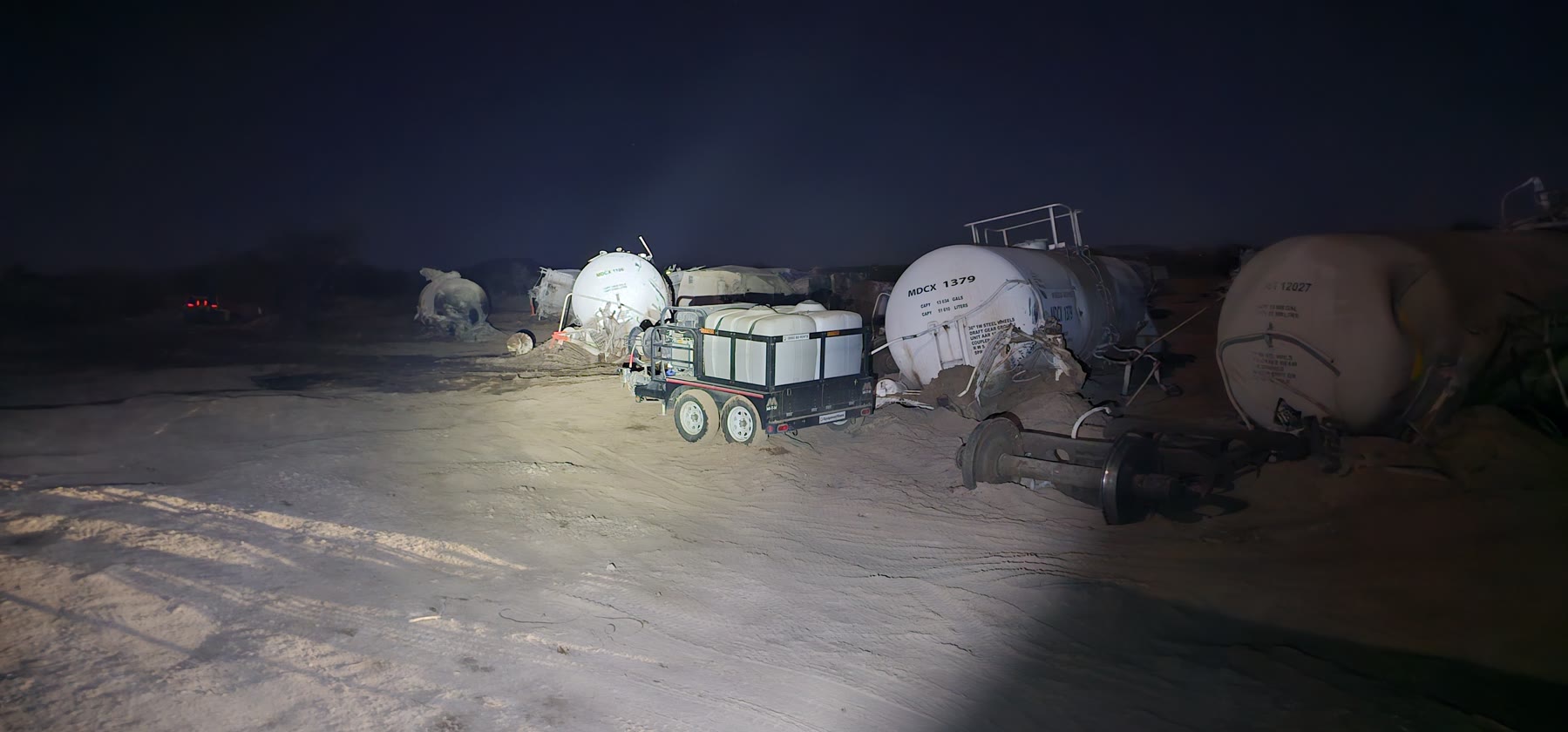
At the Benson derailment, the Privateer response was designated Operation Broken Chain. Steel had failed. Commerce stood exposed in the desert. Union Pacific needed a disciplined private force capable of deploying quickly, operating with initiative, and remaining accountable for the result. Privateer answered.
Each assignment is different. The enduring standard is not: arrive ready, understand the railroad’s objective, control the ground, protect the recovery mission, and leave a complete record.
The vessel changed. The governing principles did not.
Every Privateer assignment begins with a lawful contract. The client defines the objective and entrusts valuable interests to the company’s care. Privateer accepts the responsibility, provides the capability, and earns the relationship through performance.
The company’s vehicles are modern vessels. Cameras, drones, sensors, thermal imagers, and positioning systems serve as lookouts. Full Sail is the chart room, command log, and permanent operational record. Privateer’s Q branch develops new tools when an assignment demands a capability the ordinary security industry does not provide.
The analogy has limits, and the limits matter. Privateer is not a military force and holds no letter of marque. It is a licensed private-security company operating under contract and law. What the company carries forward is the tradition of lawful private initiative: accept a defined mission, operate with discipline beyond immediate support, protect commerce in difficult places, and remain accountable for the result.
From the high seas to the western range, from the range to the railroad
The frontier continues to change. Privateer’s purpose endures.
From sail to steel, and from steel to the streets and deserts of Southern Arizona, Privateer carries forward the same essential calling: protect lawful commerce in dangerous places, act with initiative, document the truth, and complete the mission.
The permanent Union Pacific vendor relationship is more than a company credential. It is a living connection between Tucson’s railroad heritage and the work Privateer performs today. A route that helped build the city now calls on a Tucson private-security company when that route requires protection.
Privateer carries that responsibility through discipline, technology, courage, and accountability before its clients, the law, and God.
AUTHORIZED. CONTRACTED. ACCOUNTABLE. RELENTLESS.
Historical record and operational reporting
Privateer’s permanent-vendor status, Benson deployment, operating model, and company philosophy are company declarations based on its contractual and operational records. The public sources below document the historical privateer framework, Tucson railroad history, Union Pacific lineage, and Green Valley derailment.
- U.S. Naval History and Heritage Command: congressional authorization of American privateers during the Revolution
- U.S. Naval History and Heritage Command: privateers and letters of marque
- U.S. National Archives: War of 1812 privateer and prize-court records
- City of Tucson historic-preservation record: Southern Pacific’s March 20, 1880 arrival
- Union Pacific: chronological history and the 1996 Southern Pacific merger
- Union Pacific: Southern Pacific heritage and merger date
- Union Pacific: special-agent history and the railroad’s “Bandit Hunters”
- Union Pacific: current protection of people, cargo, and rail assets
- Privateer Operational Report: Green Valley derailment secured through hazardous recovery
- Pima County: October 2024 Union Pacific derailment report